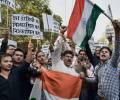
A panel discussion on Saturday had turned chaotic as some 'pro-freedom' Kashmiris, most of whom were youngsters and students, entered into heated arguments with a Kashmiri Pandit leader for hailing the Indian Army.

'To me, this is true patriotism - not deciding who should and should not say 'Bharat Mata ki jai,' in what language, with what inflexion, at what time, etc, but the recognition that the Indians who protected our country and the military traditions that made those men, must be honoured,' says Rajeev Chandrasekhar.

'If Myanmar falls to China, let it.' 'Sooner or later the rulers of the country will have to call New Delhi.'

Our problem is that we look at these words from a non-Indic perspective, says Sanjeev Nayyar.
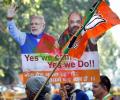
Following the victory of the Bharatiya Janata Party in Gujarat and Himachal Pradesh, reactions poured in from various leaders across the political spectrum.

Indian Americans speak up about the daunting challenges on the 16th anniversary of the tragedy.

The Covid pandemic has left a question mark on how the central government manages its staff.

D-Street is hoping RBI policy review meeting on Tuesday will uphold its stand on easing of interest rates
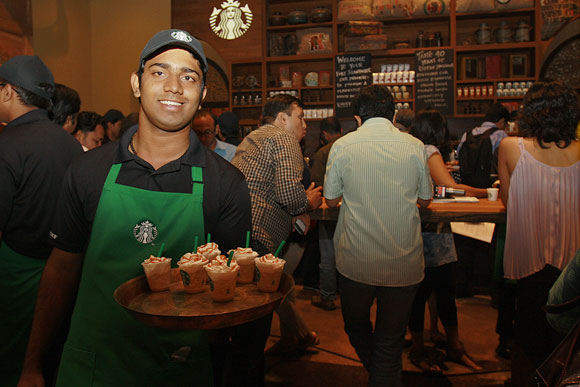
Indian state's generosity is not restricted to its poorest citizens.

Lieutenant General (retd) Michael Flynn, a former head of the Defense Intelligence Agency, advised Trump during the campaign on national security issues and often served as an introductory speaker at campaign rallies.


The national poll by Harvard Kennedy School's Institute of Politics said 32 per cent of 18-29 year-old Americans approve of Trump's job performance overall.
Questioning the freedom movement led by Gandhi, Hegde said it was an "adjustment" with the British.

Tamil film actor Kamal Haasan said, "Mersal was certified. Don't re-censor it. Counter criticism with logical response. Don't silence critics. India will shine when it speaks."

'The idea of a 'Hindu Rashtra' only emerged in the 1920s and 1930s.' 'The context at that time was the clear British attempt at 'divide and rule' between Hindus and Muslims and within Hindus on caste lines,' argues military historian Colonel Anil A Athale (retd).
